


currently in development
Summary:
In Search of Ghost Affects is an immersive project that invites audiences into a somatic encounter mediated by responsive, creature-like sculptures that capture and transmit physiological signals between participants. Separated during the interaction, participants communicate through the sculptures’ translation of internal states, perceiving one another while becoming more aware of their own bodies.
The project is grounded in the idea that internal, often unconscious states continuously shape relations between bodies, technologies, and environments through ongoing feedback loops. Drawing on Karen Barad’s concept of intra-action and Brian Massumi’s notion of ghost affects, the work makes perceptible how relational forces emerge prior to conscious thought.
Developed for a solo exhibition at Tetem in Enschede (21 October 2026 – 4 April 2027), the installation offers a public setting in which these otherwise invisible dynamics can be directly experienced.
Visitor's experience
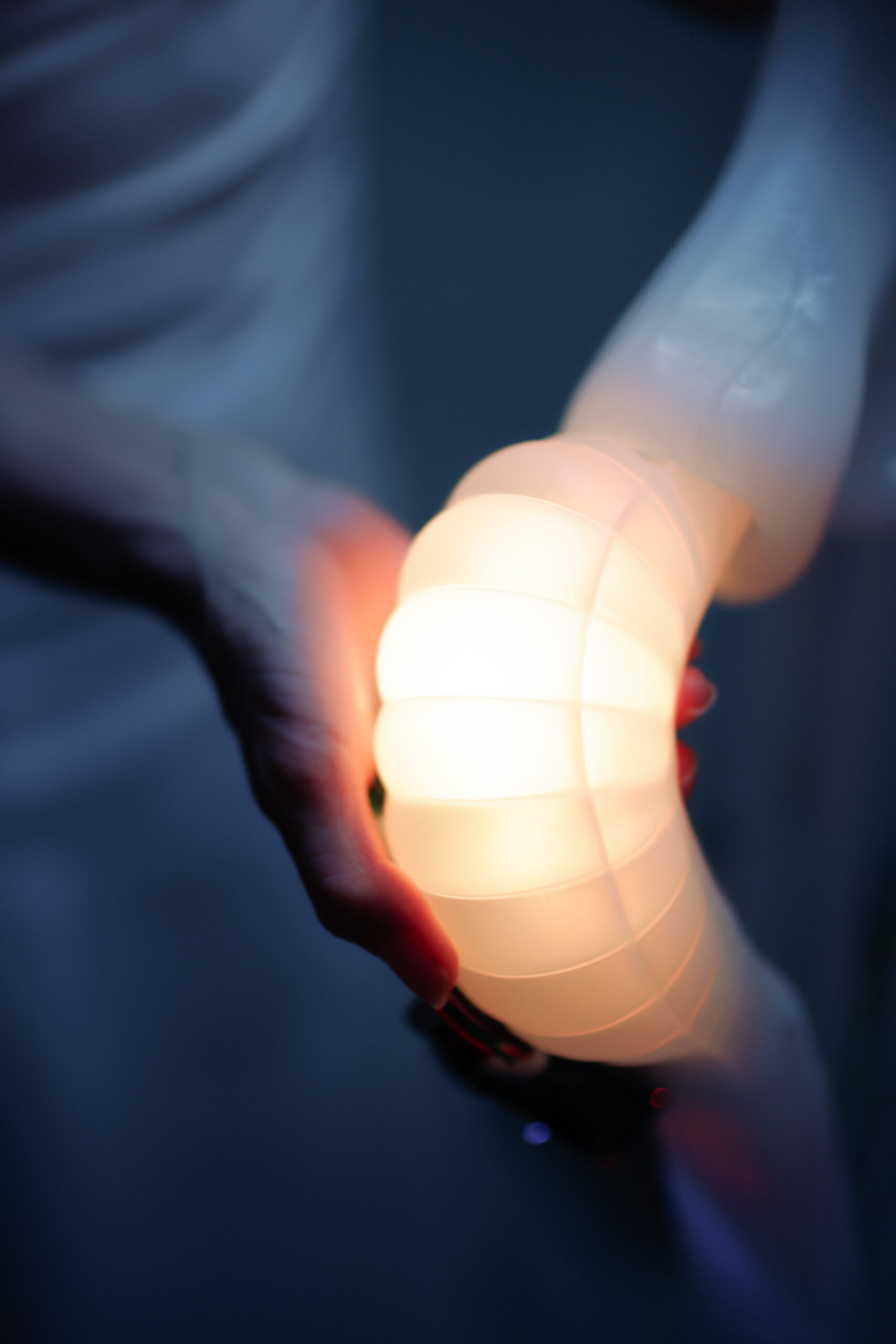
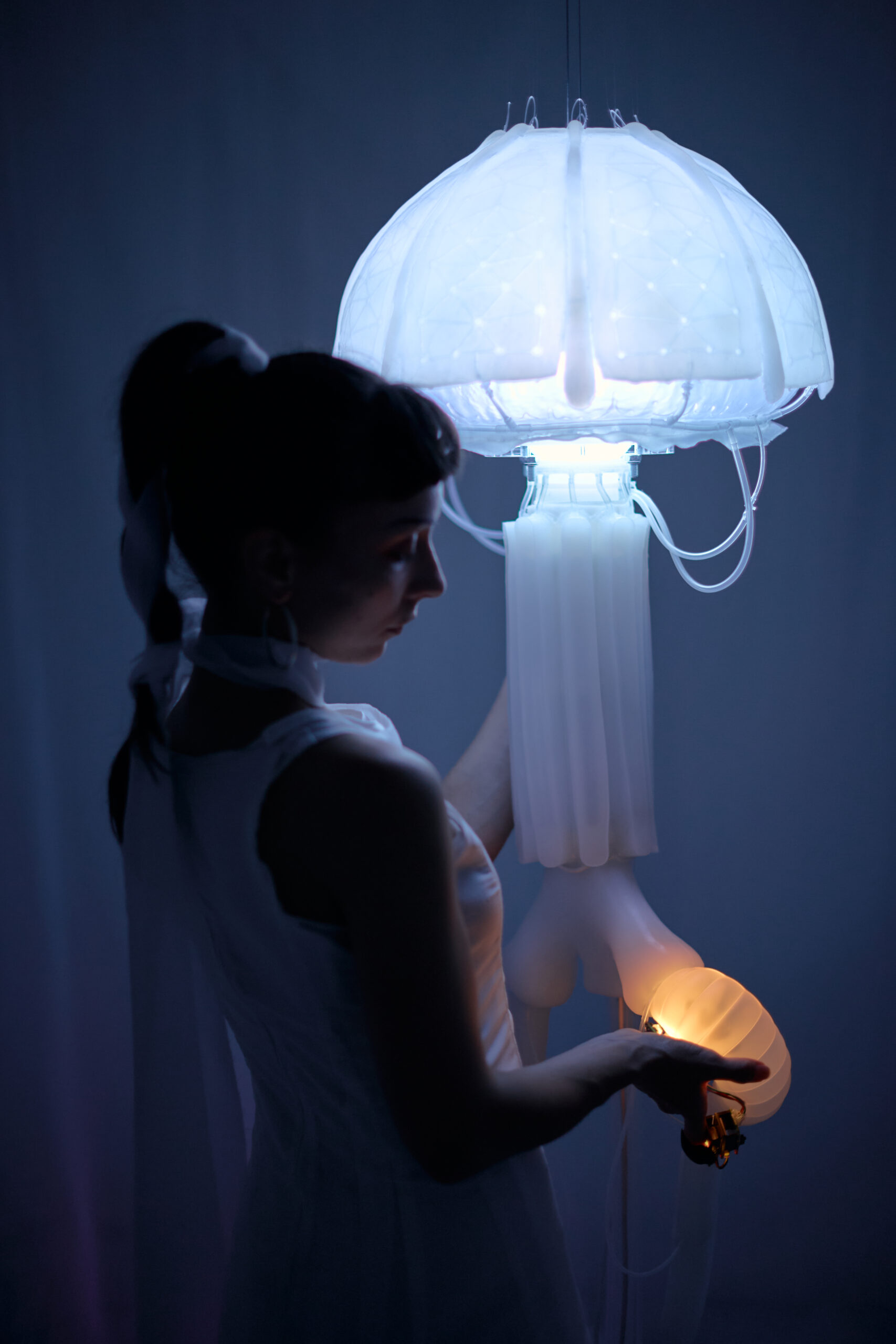
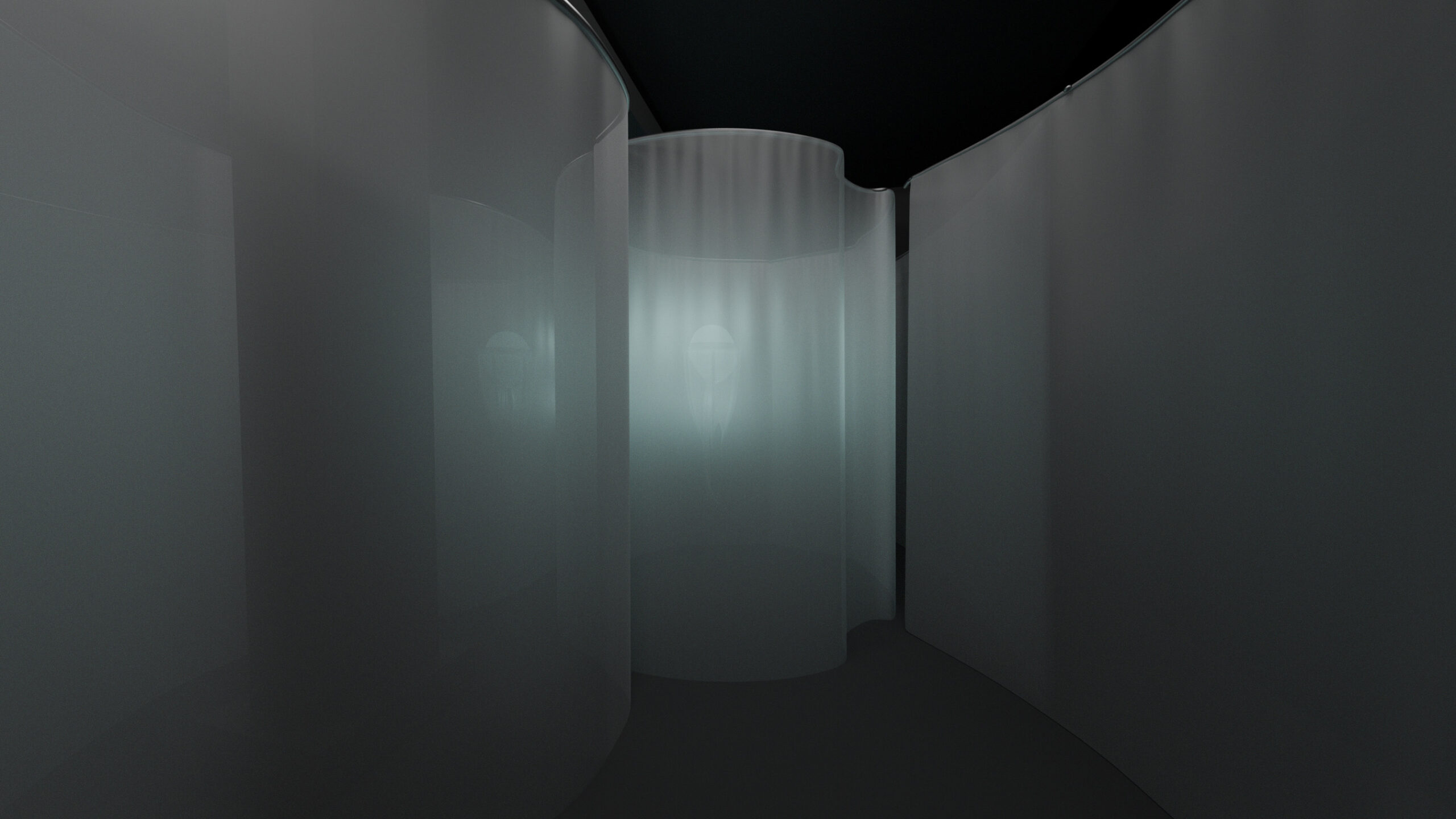
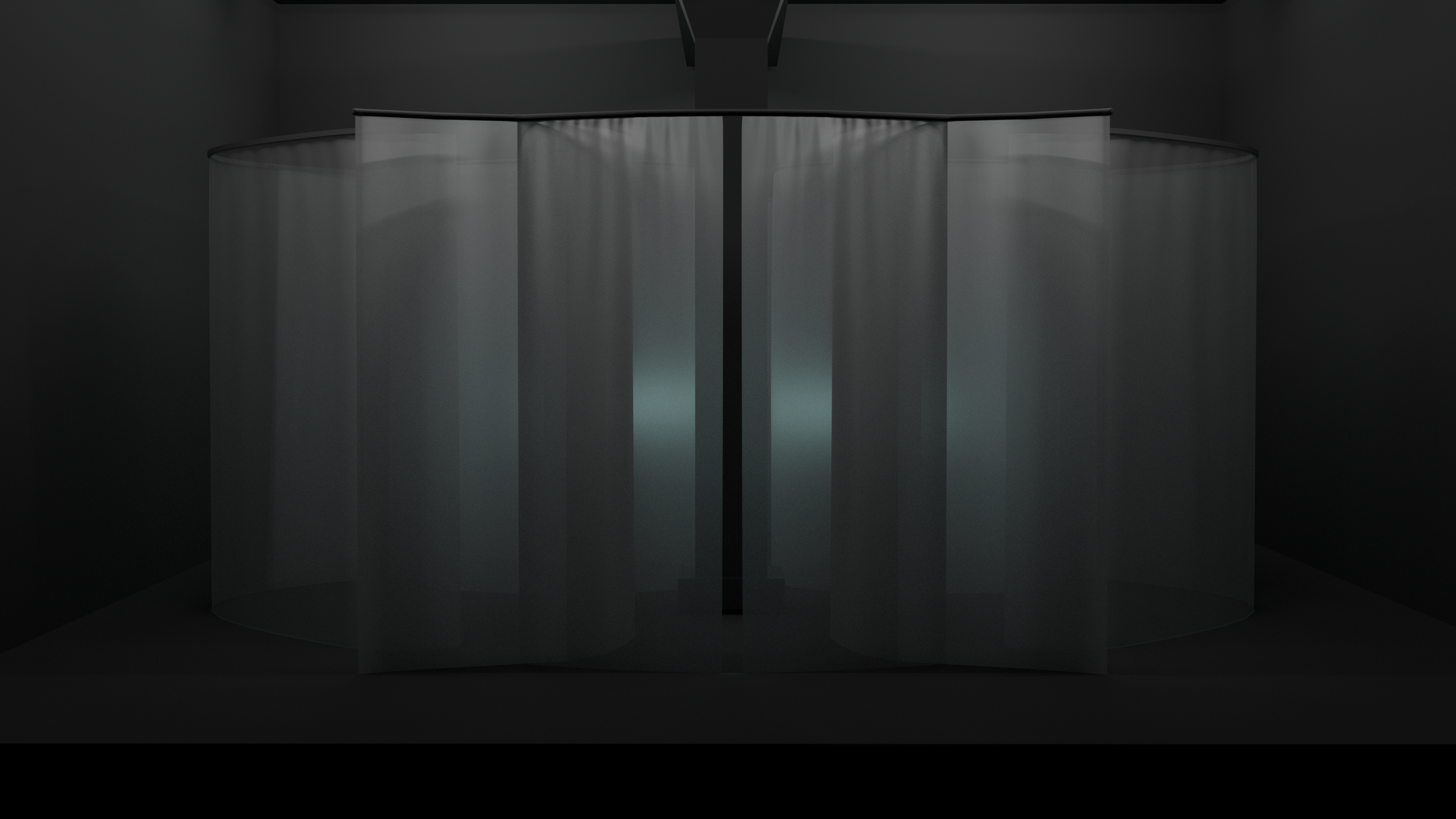
The exhibition is designed as a ritualised journey built around three main elements: a wearable sculpture—a bracelet equipped with biosensors and control buttons—which detects each visitor’s physiological data; a central interactive sculpture that physically manifests this data in its body; and a spatial environment that facilitates and reflects traces of the interaction. The experience is structured as a series of embodied transitions rather than one main interaction. The exhibition space at Tetem will be transformed into a porous, fluid environment composed of layered translucent fabrics and soft architectural divisions. The spatial design guides participants through distinct stages: introduction, separation, calibration, interaction, and reunion.
Interaction
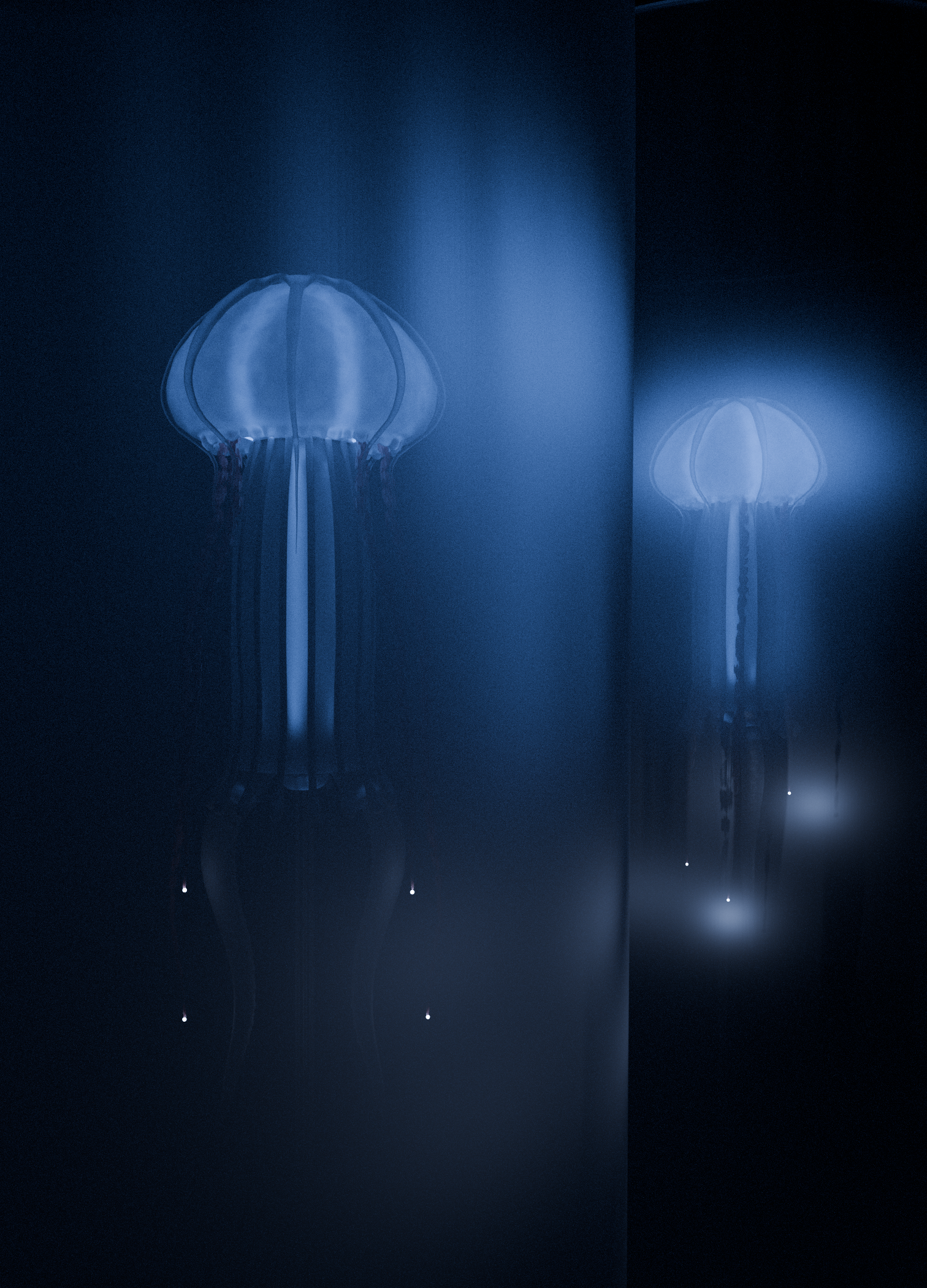
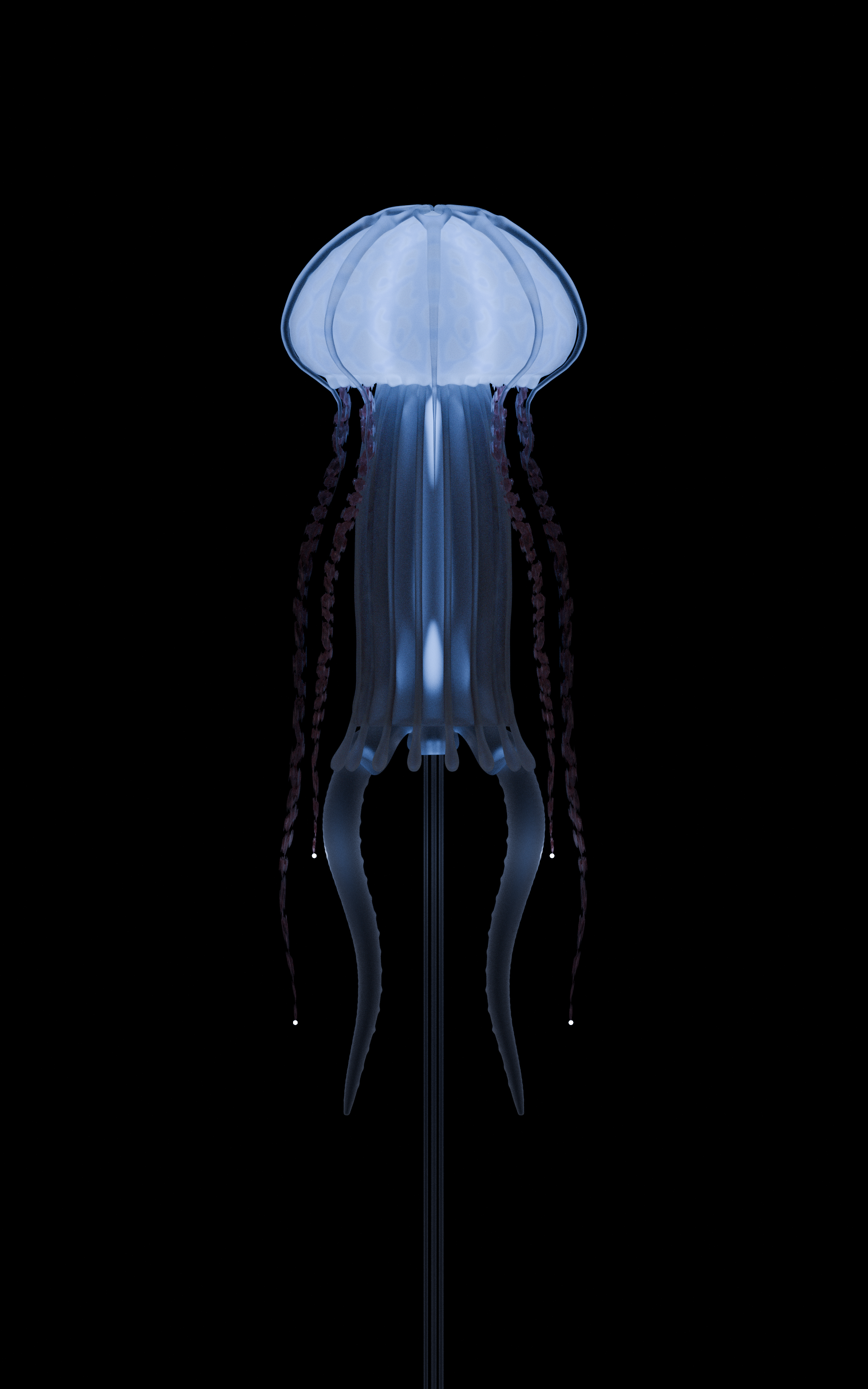
Visitors enter the central interaction space, which opens automatically when the calibration process is complete. Participants then encounter a suspended, soft-bodied sculpture that appears to levitate within flowing fabrics and diffuse light, evoking a tentacular organism. Its body will inflate – to signal receipt – and deflate to show avoidance. The sculpture’s behaviour is driven by the affective signals of the person in the opposite chamber who is also wearing the biosensing bracelet. By modulating its behaviour based on the affective fluctuations of the other person - calculated as a difference to their baseline, the neutral state established at the beginning of the experience. Person A experiences Person B’s physiological changes through the sculpture’s shifting body and tactile responses—and vice versa.
Important to mention that the system does not detect fixed emotions. Research on biosensing suggests that there are no universal emotional signatures—only measurable changes, and these changes are the primary forces that drive the interaction. The software translates these changes into ‘moods’ or ‘modes’ that alter the sculpture’s movement, inflation patterns, and colouration. This bracelet simultaneously monitors the participant’s physiological shifts and offers subtle alerts to the wearer. Participants are not told what they should feel; instead, they are invited to interpret and respond, with agency and self-awareness. This set-up makes perceptible what Brian Massumi calls ghost affects, those pre-cognitive bodily intensities that shape experience before conscious recognition.
Tentacular sculpture design
The sculpture draws conceptual inspiration from Donna Haraway’s concepts of tentacular thinking and from inter-species communication models. Like an octopus, which “thinks” through distributed neural networks in its arms, the sculpture extends its responsive tentacles. These inflate or retract in response to both local touch and remote touch from the other participant, making them the primary source of contact and interaction. This reciprocity allows visitors to perceive both the immediate effect of their actions and the presence of others’ actions. Cause and effect become embodied and relational. Colour shifts are a reference to cephalopod camouflage and communication strategies. Just as cuttlefish and octopuses modulate skin tone and texture to communicate or protect themselves, this sculpture alters colour and its form/texture through pneumatic chambers embedded in its soft structure.
Agency and Safety
Ethical boundaries are integral to the work. If a harmful interaction is detected, the sculpture first communicates a warning signal through visual and tactile means. Repeated abuse causes the sculpture to shut down, ending the interaction. This positions the technological body as an agent capable of self-protection and of deciding to stop the interaction. Participants may also voluntarily terminate the interaction by pressing their bracelet. This stops data transmission and signals closure to both sides, ensuring mutual awareness and consent.
Reunion and Reflection Stage
After the interaction, visitors move into a shared meeting space where they encounter the person they just experienced through the sculpture. Visitors may speak, sit quietly, or observe others as they interact. Lighting design ensures that participants in the interaction space cannot see well beyond that space, while observers can witness the sculptural encounter from a distance. Touchscreen tablets and notebooks will be made available for sharing feedback or personal stories, answering research questions, and reading more about the project. This space serves as a space for decompression, dialogue, and integration. Visitors exit when ready. The ritual concludes not with something spectacular, but with a moment of quiet reflection.
Conclusion
Unlike conventional uses of biofeedback that present physiological data as graphs or numerical measurements, In Search of Ghost Affects proposes an embodied approach to sensing. Instead of analysing information rationally, participants perceive it: they see, feel, and interpret the creature's behaviours. This approach shifts the focus from quantitative measurement to the lived experience present in natural ecosystems.
Crucially, the installation does not classify or judge emotional states. Rather than labelling specific emotions, the system highlights changes that occur in participants from the moment they are wearing the bracelet and have calibrated their neutral state. These variations—often subtle and transient—are expressed through the sculpture's continuously transforming body.
By studying principles of interspecies communication and applying them to human–technology relationships, the project speculates on a future in which technological systems become integrated into the living ecosystems we inhabit. In this scenario, technology is no longer a passive tool but a responsive entity that helps us perceive aspects of ourselves that normally remain hidden, unprocessed.
Through the shape-shifting creature and its biosensing components, In Search of Ghost Affects offers visitors a glimpse into the fleeting physiological processes that underlie human interaction.
The installation reveals how internal states ripple outward, influencing others and transforming the atmosphere of shared environments. In doing so, it invites participants to reflect on empathy, adaptability, and the delicate web of relations through which we continuously shape—and are shaped by—the world around us.
Interactive Installation
Aluminium, steel, textile, silicone, electronics
2026
The Hague / Enschede
- Exhibition partner: Tetem
- Software development and PCB's: Nathan Marcus
- Metalwork and mechanism spatial installation: Alper Cekinmez
- Video and 3D Renders: Levi Kramer
- Adviser video: Sybren Ypma
- 3D Modeling: Toke Nielsen
- Woodwork: Lewis Beal
- Textiles: Anna Lora
- Research partner: Femke Krijger
- Supported by Amarte Fonds
- Supported by Stroom
- Supported by Creative Industries NL, Digital Culture Gramt
Related show:
-
21.10.2026: In Search of Ghost Affects until 04.04.2027- Tetem
- Solo Exhibition


